
Bringing a senior engineer into an existing team is not a simple placement exercise. Even highly experienced engineers can lose momentum when they encounter unclear workflows, limited access to systems, or unfamiliar team dynamics. These early inefficiencies compound quickly, slowing delivery and creating unnecessary friction for both the engineer and the client.
Most staff augmentation models stop at placement. The assumption is that a strong resume translates directly into immediate impact. In practice, that assumption breaks down. Performance is not just a function of skill. It is a function of environment, clarity, and support.
At Ardan Labs, we approach staff augmentation as an engineering problem. The question is not just who to place, but how to ensure that person succeeds inside a new system. Over time, we have architected a structured lifecycle refined across multiple client engagements and applied across teams of varying scale and complexity. This lifecycle supports senior engineers from the moment they are selected through their full engagement with a client. It is built on three phases: pre onboarding, active integration, and continuous advocacy.
This is what allows our engineers to contribute faster, integrate more effectively, and deliver consistently over time.
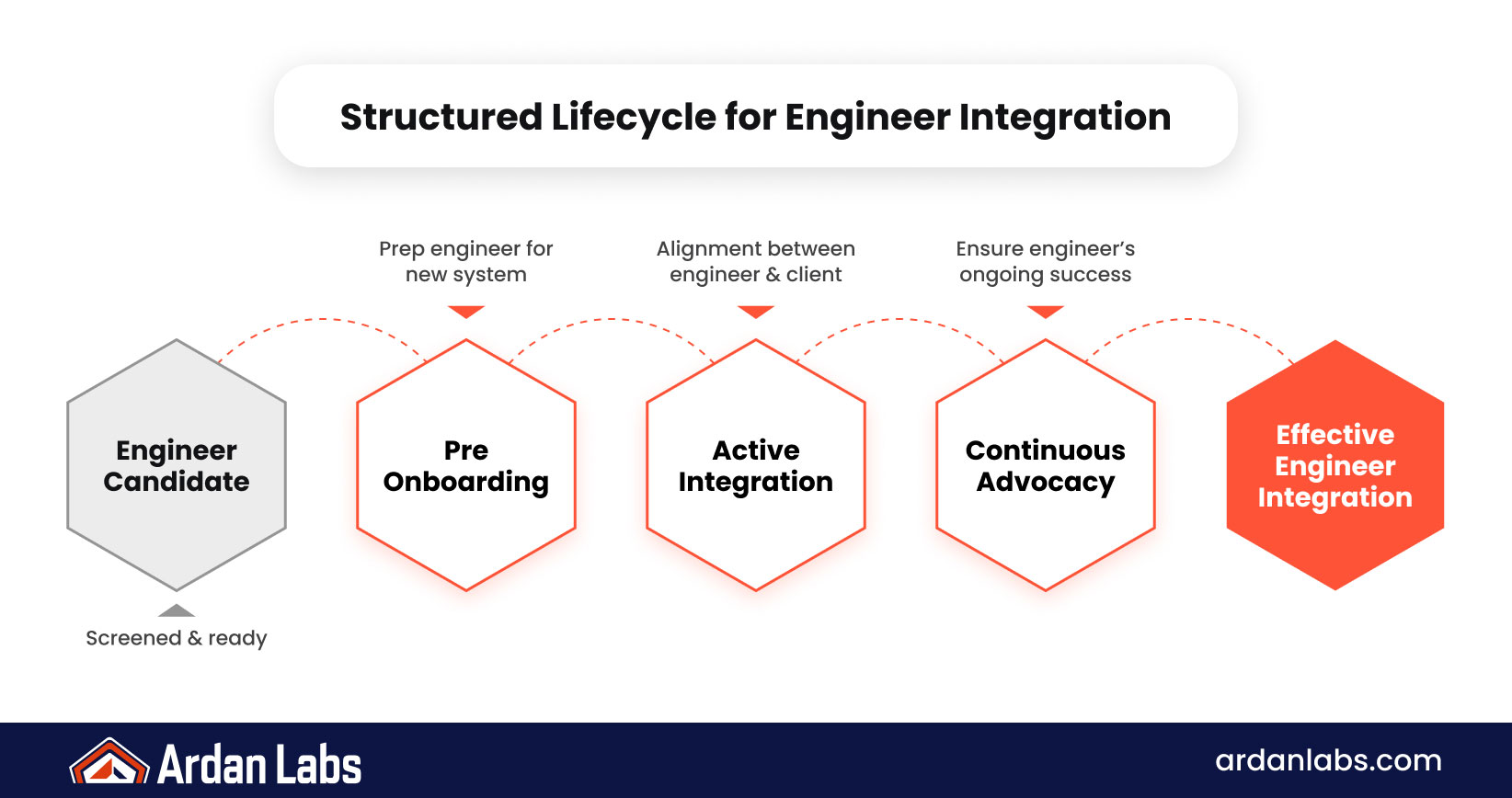
Step 1: Pre Onboarding — Establishing Readiness Before Day One
The most overlooked phase of staff augmentation is what happens before the engineer ever joins the client team. This is where momentum is either created or lost.
Pre onboarding begins with establishing a clear and complete understanding of the engagement. We work closely with clients to define the full scope of the Statement of Work (SOW), technical expectations, and any onboarding requirements upfront. From there, we build a structured onboarding guide tailored to that specific environment, ensuring priorities are clear and nothing is missed.
With that foundation in place, we prepare engineers to enter the engagement without friction.
This phase is deliberate and comprehensive:
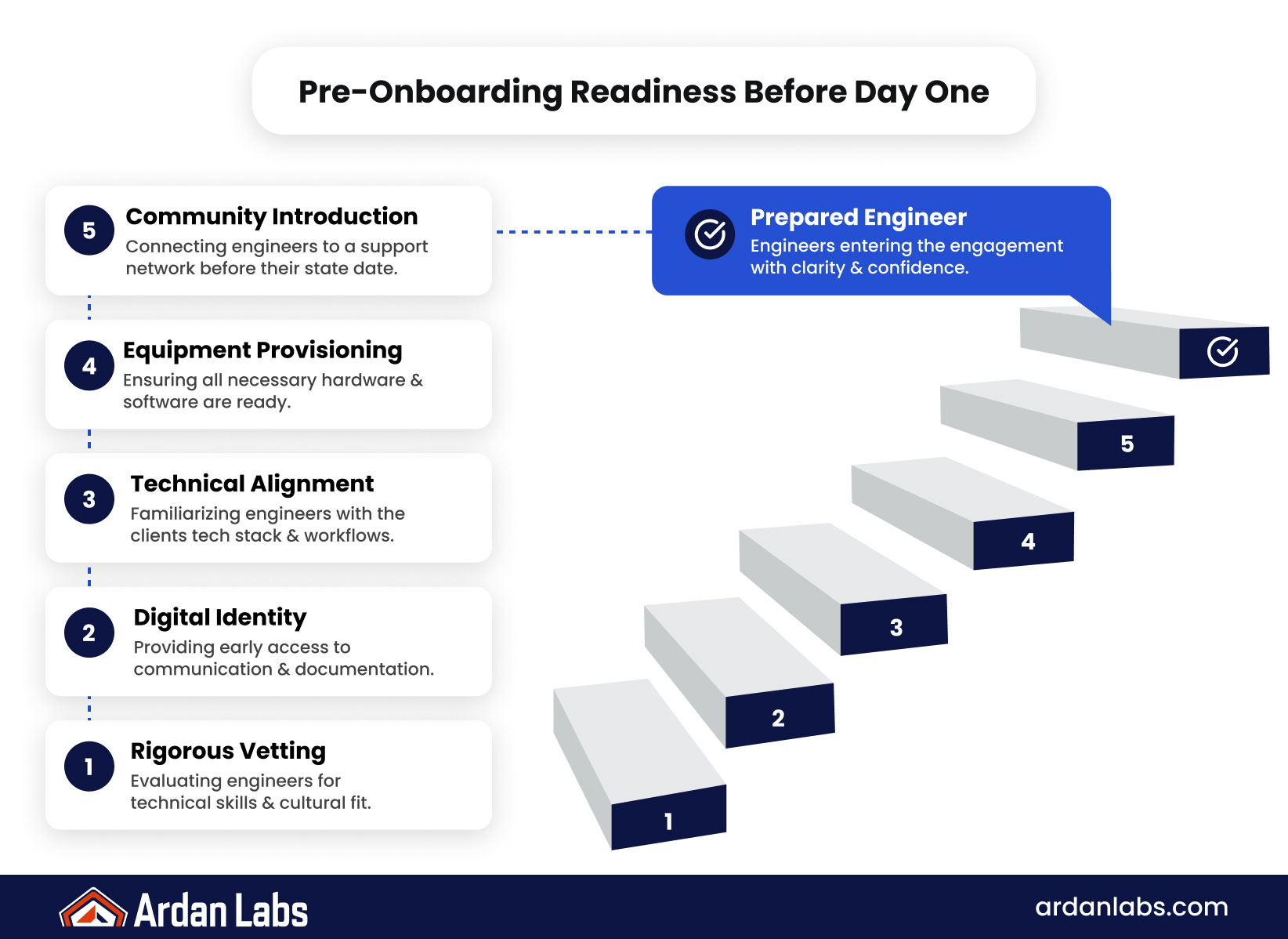
- Rigorous Vetting — Engineers are evaluated not only for technical capability but also for alignment with client expectations, compliance requirements, and working style. Background checks are conducted as a standard practice to maintain quality and protect both the client and our engineers.
- Digital Identity and Access — We coordinate early access to communication platforms, documentation systems, and internal tooling so engineers are not blocked on day one.
- Technical Alignment — Where necessary, engineers are given early exposure to the client’s stack, standards, and workflows. This ensures familiarity before they begin contributing.
- Equipment and Logistics — All required hardware, software, and credentials are provisioned in advance to avoid operational gaps.
- Community Introduction — Engineers are connected to the Ardan Labs network before their start date, giving them immediate access to a support system that extends beyond the client environment.
The result is a prepared engineer who enters the engagement with clarity, confidence, and the ability to focus on meaningful work from the start.
Step 2: Active Integration — Embedding Engineers Into the Client Environment
Once the engagement begins, success depends on how quickly the engineer can understand the system they are entering. This includes not just codebases and tools, but also communication patterns, decision making structures, and team expectations.
Integration is treated as an active process, not a passive adjustment period.
We create structured support around the engineer to accelerate this transition:
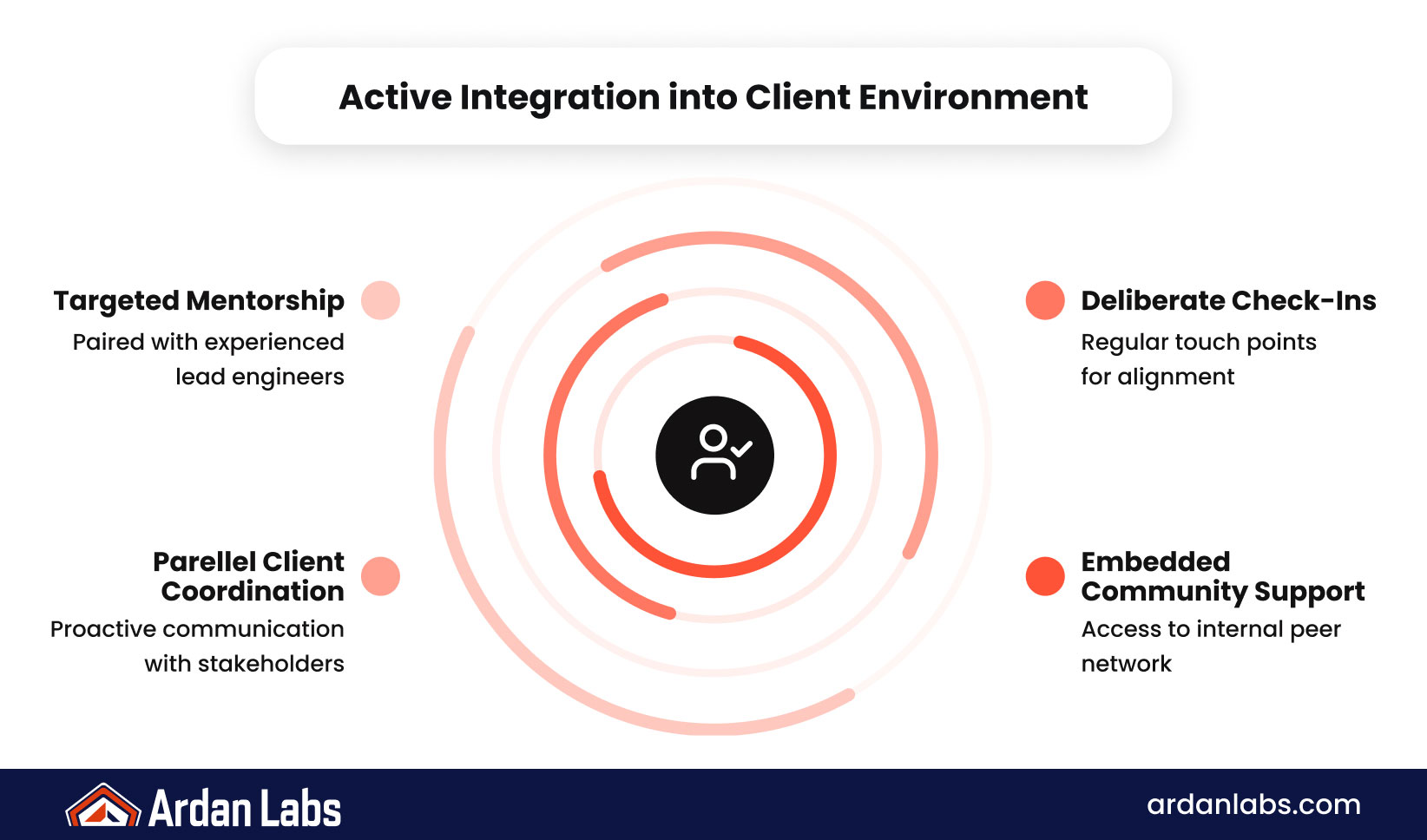
Targeted Mentorship — Engineers are supported by experienced Ardan Labs team leads who guide them through technical expectations, workflows, and team dynamics. Where prior client experience exists, it is applied directly. Where it does not, engineers leverage our internal network of seasoned leads, ensuring they are never operating without context or support.
Embedded Community Support — Our internal channels give engineers access to a broader network of peers who can provide guidance, share context, and help resolve challenges quickly.
Deliberate Check Ins — Regular touchpoints during the early stages allow us to identify friction early, reinforce priorities, and ensure alignment between the engineer and the client team.
Parallel Client Coordination — We maintain communication with client stakeholders to proactively address gaps, clarify expectations, and prevent misalignment before it impacts delivery.
This approach allows engineers to establish trust, understand their role, and begin contributing in a meaningful way without the typical lag associated with new placements.
Step 3: Continuous Advocacy — Sustaining Performance Over Time
Initial integration is only the beginning. Long term success requires ongoing support that evolves with the engagement.
Without a structured system in place, engineers are often left to navigate challenges in isolation. This leads to avoidable slowdowns, miscommunication, and disengagement over time.
At Ardan Labs, we remain actively involved throughout the lifecycle of the engagement, applying the same disciplined approach that has proven effective across diverse client environments.
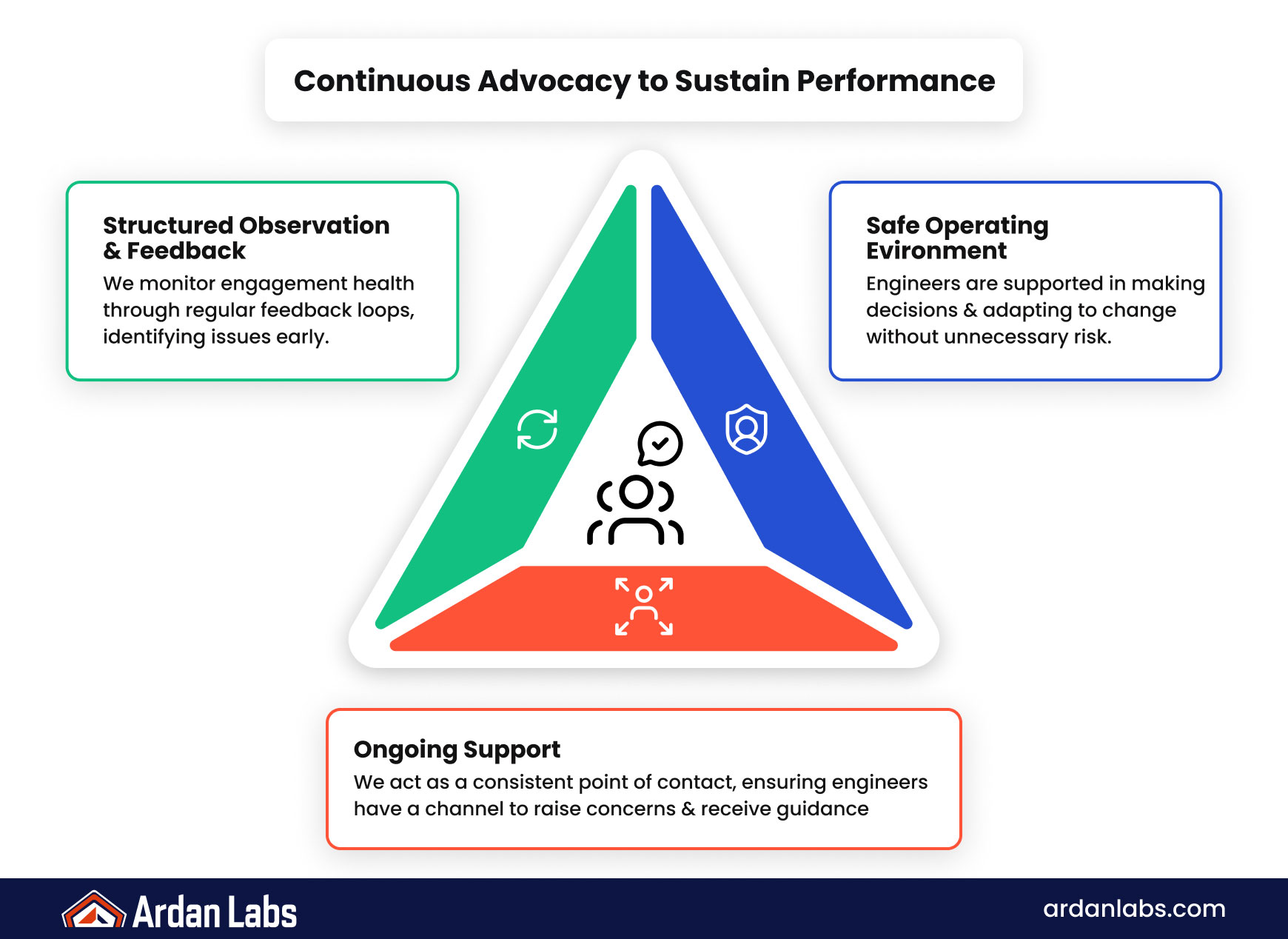
A Safe Operating Environment — Engineers are supported in making decisions, exploring solutions, and adapting to change without unnecessary risk or hesitation.
Ongoing Support — We act as a consistent point of contact, ensuring engineers have a channel to raise concerns, validate decisions, and receive guidance when needed.
Structured Observation and Feedback — We monitor engagement health through regular feedback loops, allowing us to identify issues early while respecting the autonomy of the client team.
This layer of support creates stability. Engineers stay focused and engaged. Clients receive consistent, high quality contributions without disruption.
What This Means for Staff Augmentation
When you examine staff augmentation through a systems lens, a clear pattern emerges. Successful engagements are not defined by placement alone. They are defined by preparation, integration, and sustained support working together.
This is where most recruiting models fall short. They optimize for placement speed, not long term effectiveness.
Our approach is different by design:
- Engineers arrive prepared, not reactive
- Integration is guided, not left to chance
- Support continues, rather than disappearing after onboarding
These are not add ons. They are the core of how we operate, shaped by real world engineering experience and continuously refined through client work.

Staff augmentation, when done correctly, is not a transaction. It is a structured extension of an engineering organization.
At Ardan Labs, we do not simply place senior engineers and step away. We bring a system that has been tested, refined, and proven in real client environments. Every phase from pre onboarding to long term advocacy is intentional and designed to produce consistent results.
This is how we ensure that the engineers we place are not only capable, but positioned to succeed.
For organizations looking to strengthen their teams with experienced engineers who can integrate quickly and deliver with confidence, Ardan Labs provides both the talent and the framework to make that outcome predictable.
If you are evaluating staff augmentation and want a partner that takes responsibility for outcomes, not just placement, we should talk.
Frequently Asked Questions
Staff augmentation is a model where organizations extend their internal teams with external engineers to meet specific project or capacity needs. Unlike traditional hiring, it allows companies to bring in experienced talent quickly while maintaining control over their systems, processes, and roadmap.
Most staffing firms focus on sourcing and placement. Ardan Labs focuses on outcomes. We provide senior engineers supported by a structured system that includes pre onboarding, active integration, and continuous advocacy. This ensures engineers are not only qualified, but positioned to succeed within your environment.
Because of our structured pre-onboarding process, engineers are prepared before day one. With early access to systems, technical alignment, and clear expectations, most engineers begin contributing meaningfully within the first weeks rather than spending that time ramping up.
Even in new client environments, engineers are supported by experienced Ardan Labs team leads and a broader internal network. This ensures they have access to guidance, context, and proven practices regardless of prior client exposure.
We treat integration as an active process. Through mentorship, structured check-ins, and ongoing coordination with client stakeholders, we help engineers align with workflows, communication styles, and team expectations quickly and effectively.
Yes. Our involvement continues throughout the engagement. We provide ongoing advocacy, feedback loops, and support systems to ensure engineers remain effective, engaged, and aligned as project needs evolve.
We focus on senior level engineers who bring both technical depth and professional experience. This allows them to operate independently, adapt quickly, and contribute to complex systems from the start.
Engineers go through rigorous vetting for both technical capability and alignment with client expectations. We also conduct background checks as a standard practice and support engineers throughout the engagement to maintain consistent performance.
Yes. Staff augmentation is designed to be flexible. Whether you need to add a single engineer or scale a team, the model allows you to adjust capacity based on project demands without long term hiring commitments.
It can be both. Some organizations use it to accelerate specific initiatives, while others use it as a long term extension of their engineering team. Our structured approach supports both scenarios by ensuring consistency over time.
We eliminate common onboarding friction through early preparation, clear documentation, system access, and guided integration. This allows engineers to focus on contributing rather than navigating uncertainty.
Staff augmentation is ideal when speed, flexibility, or specialized expertise is required. It allows organizations to move quickly without the delays and long term commitments associated with full time hiring.